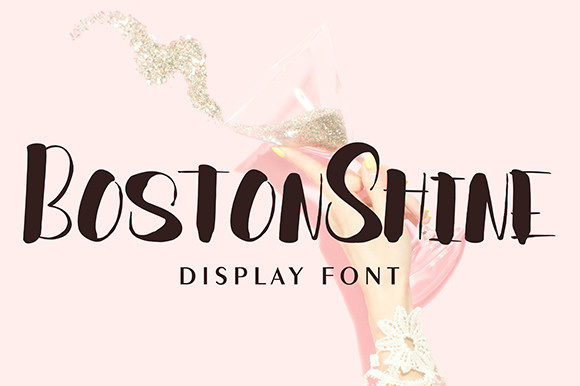
Boston Shine: A Comprehensive Evaluation for Designers
In the landscape of digital and print typography, selecting the right typeface is often a matter of balancing aesthetic appeal with functional clarity. Boston Shine has emerged as a distinct option for professionals seeking a display font that combines a trendy, chic character with high visual impact. Unlike standard body text fonts designed for readability over long passages, this typeface is engineered to capture attention in short bursts of information. This article provides an objective evaluation of Boston Shine, exploring its characteristics, practical applications, and the specific scenarios where it serves as an optimal choice versus when alternatives might be more suitable.
Understanding the Typography Profile
Boston Shine is classified as a display font, a category reserved for large-scale usage where legibility is secondary to stylistic expression. The design features sharp contrasts between thick and thin strokes, often accompanied by elegant serifs or unique flourishes that evoke a sense of luxury and modernity. Its name suggests a polished finish, which is reflected in the way the characters interact with light and space on a page. When rendered at larger sizes, the font's intricate details become prominent, creating a texture that feels both sophisticated and contemporary.
The primary function of this font is to act as a visual anchor. It is not intended to carry the weight of paragraphs or dense blocks of text. Instead, it excels in headlines, titles, and key phrases where the goal is to establish a mood immediately. The "chic" descriptor associated with it implies a connection to fashion, lifestyle, and high-end branding, making it a versatile tool for industries that rely heavily on visual storytelling.
Strategic Applications and Benefits
Designers often turn to specialized display fonts like Boston Shine to differentiate their work from generic templates. The benefits of incorporating this typeface into a project are multifaceted, primarily revolving around brand identity and audience engagement.
- Immediate Visual Impact: In crowded environments such as social media feeds or busy retail spaces, a distinctive font can stop a viewer from scrolling or walking past. Boston Shine offers a unique silhouette that commands attention without relying solely on color or imagery.
- Brand Personality Definition: If a client aims to project an image of elegance, trendiness, or exclusivity, this font aligns well with those values. It helps communicate a brand's voice before a single word is read, setting the tone for the entire piece.
- Versatility in Print Media: As noted in its description, the font performs exceptionally well on posters, flyers, and brochures. The high contrast of the letterforms ensures they remain crisp even when printed on various paper stocks, provided the resolution is sufficient.
- Stylistic Cohesion: For projects requiring a specific retro-modern or glamorous aesthetic, Boston Shine provides a ready-made solution that eliminates the need for extensive custom lettering.
Practical Considerations and Tradeoffs
While the aesthetic qualities of Boston Shine are compelling, there are significant tradeoffs that designers must consider before committing to it for a project. Understanding these limitations is crucial for maintaining professional standards.
The most critical limitation is legibility at small sizes. Because the font relies on stylistic flourishes and varying stroke widths, reducing it to a size below 12 points often results in a loss of detail and potential confusion between similar characters. Consequently, using it for body text is strongly discouraged. It should be paired with a neutral sans-serif or serif font for supporting content to ensure the overall layout remains readable.
Another consideration is context sensitivity. The "trendy" nature of the font means it may date quickly if used in materials intended for long-term archival or evergreen content. Trends shift rapidly, and a font that feels current today might appear dated in three years. Furthermore, the specific "chic" vibe may clash with brands that prioritize minimalism, utility, or corporate sobriety. In sectors like finance, healthcare, or government, this font could undermine credibility by appearing too decorative.
Situational Fit: When to Choose Boston Shine
Determining whether Boston Shine aligns with your goals requires a clear assessment of the project's purpose. This typeface is a strong fit for the following scenarios:
- Lifestyle and Fashion Branding: Campaigns for clothing lines, beauty products, or boutique hotels benefit from the luxurious feel of the font. It reinforces the aspirational nature of these industries.
- Event Promotion: Posters and flyers for galas, fashion shows, concerts, or exclusive parties require a font that conveys excitement and sophistication. Boston Shine delivers this effectively in headline formats.
- Editorial Headers: Magazine covers, blog post titles, and feature article headers can utilize the font to add a layer of editorial flair that distinguishes them from standard web typography.
- Short-Form Social Graphics: Instagram stories, Pinterest pins, and Facebook ads often rely on bold imagery and short text. Here, the font's ability to stand out in a thumbnail view is a distinct advantage.
When to Consider Alternatives
There are instances where opting for Boston Shine would be counterproductive. Designers should evaluate alternative typefaces if:
- Readability is Paramount: If the content involves complex data, legal disclaimers, or instructional manuals, a highly legible, neutral typeface is necessary.
- Corporate Consistency is Required: Established brands with strict style guides may find this font too divergent from their existing visual identity.
- Multi-Language Support is Needed: Display fonts sometimes lack the extensive character sets found in system fonts. If the project requires support for multiple languages or special diacritics, compatibility issues may arise.
- Minimalist Aesthetics are Preferred: Projects aiming for a clean, understated look may find the ornamental aspects of Boston Shine distracting rather than enhancing.
Decision-Making Insights for Designers
To make an informed decision, designers should create mockups testing Boston Shine against their specific use cases. It is advisable to test the font at various sizes, particularly near the threshold of legibility, to understand its behavior. Additionally, pairing experiments are essential; try combining Boston Shine with simple geometric sans-serifs to see if the contrast creates harmony or chaos.
Ultimately, the value of Boston Shine lies in its ability to transform a standard layout into something memorable. However, its power is best realized when used with restraint. By treating it as a spotlight rather than a floodlight, designers can leverage its trendy and chic attributes to enhance communication without compromising clarity. Whether for a poster, flyer, or print project, the decision to use Boston Shine should be driven by a strategic alignment with the project's emotional goals and functional requirements.
For those looking to explore its endless possibilities, starting with small-scale tests in controlled environments is the most prudent approach. This method allows for a realistic assessment of how the font interacts with other design elements, ensuring that the final output meets both aesthetic and practical standards.