Abington: A Comprehensive Evaluation of the Display Typeface
In the expansive ecosystem of digital typography, selecting the right typeface is rarely a matter of simple preference; it is a strategic decision that influences brand perception, readability, and overall aesthetic cohesion. Among the myriad options available to designers, Abington has emerged as a distinct contender. Characterized by its daring structure and stylish execution, this display font offers a unique proposition for creators seeking to make a visual statement. This evaluation explores the functional attributes of Abington, assessing its potential as a valuable asset to a font library while providing an objective analysis of where it fits within professional design workflows.
Understanding the Identity of Abington
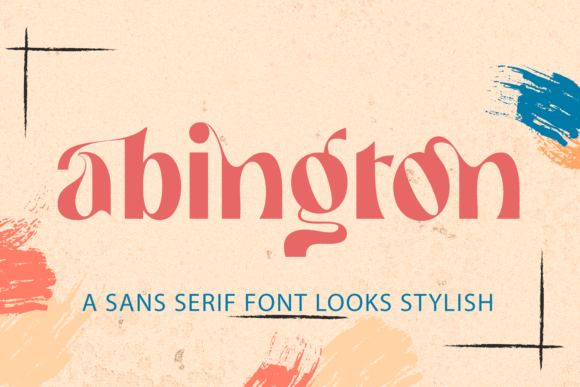
To understand the utility of Abington, one must first define its typographic DNA. Unlike traditional serif or sans-serif families designed primarily for body text, Abington is engineered as a display font. This classification indicates that the typeface is optimized for large sizes, such as headlines, titles, posters, and branding elements, rather than extended passages of text. The "daring" nature mentioned in its description refers to its structural irregularities and stylistic flourishes that deviate from standard geometric norms. These deviations create a personality that is both modern and slightly edgy, distinguishing it from more conservative typefaces found in standard operating systems.
The "stylish" aspect of Abington suggests a high degree of refinement in its stroke contrast and terminal shapes. In practice, this means the font likely possesses a strong character set that can convey mood instantly. When integrated into a layout, Abington does not merely present information; it frames the content with a specific tone. For designers looking to break away from the ubiquitous grid-based layouts that dominate web and print media, Abington provides a tool to inject energy and movement into static compositions.
Strategic Benefits for Design Libraries
For graphic designers, art directors, and agencies managing extensive font libraries, the inclusion of Abington presents several practical benefits. The primary advantage lies in its versatility across diverse topics. While many display fonts are niche—suited only for horror themes, vintage aesthetics, or luxury fashion—Abington is positioned as a broader asset. Its ability to elevate various creations stems from a balanced design language that avoids extreme stylization which might limit its application.
- Visual Hierarchy: The bold presence of Abington allows designers to establish immediate visual hierarchy. It naturally draws the eye, making it ideal for call-to-action buttons, hero sections on websites, or cover art.
- Brand Differentiation: In saturated markets, using a distinctive font like Abington can help a brand stand out. It signals creativity and confidence, traits often desired in lifestyle, tech, and creative industry sectors.
- Limited Inventory Efficiency: Because of its broad appeal, adding Abington to a collection can reduce the need for multiple specialized display fonts. It serves as a "go-to" option when a project requires a touch of flair without necessitating a complete search for a new typeface.
Tradeoffs and Practical Considerations
While the potential of Abington is significant, a balanced evaluation requires acknowledging its limitations. As a display font, its most obvious tradeoff is its unsuitability for body copy. Attempting to use Abington for long-form reading will result in poor legibility and user fatigue. Designers must be prepared to pair it with a highly neutral, readable typeface, such as a clean grotesque sans-serif or a classic serif, to ensure accessibility and balance.
Another consideration is the risk of overuse. Because Abington is described as "daring," there is a temptation to apply it too frequently. If every headline in a campaign uses this font, the impact diminishes, and the design may appear chaotic or unprofessional. Effective use requires restraint. Furthermore, the specific stylistic nuances of Abington may not align with all brand identities. A corporate law firm or a healthcare provider might find the "daring" nature of the font too aggressive, potentially undermining their message of stability and trust.
Ideal Use Cases for Abington
Despite these considerations, there are specific scenarios where Abington is a strong fit. It excels in contexts where visual impact takes precedence over dense information delivery. For example, in event marketing, concert posters, or album covers, the font's stylish characteristics can effectively communicate the energy of the subject matter.
Additionally, Abington is well-suited for editorial design where the goal is to create a striking magazine spread or a feature article header. In these instances, the font acts as a visual anchor, setting the mood before the reader engages with the text. Web design also offers fertile ground for Abington, particularly in landing pages where a single, powerful headline needs to capture attention within seconds. The font's ability to elevate a creation makes it particularly useful for branding projects that aim to project innovation and forward-thinking.
When to Seek Alternatives
Conversely, there are situations where alternatives to Abington may be worth considering. If a project demands a neutral, invisible voice that lets the content speak for itself, a more understated display font would be preferable. Similarly, if the target audience includes users with visual impairments or if the design requires strict adherence to WCAG (Web Content Accessibility Guidelines) regarding font weight and spacing, a more conventional typeface might be safer.
Designers working on international projects should also evaluate the character set of Abington carefully. Some display fonts have limited support for non-Latin scripts or lack essential punctuation marks required for global distribution. If the project involves multilingual content, verifying the font's coverage is a critical step before selection. In cases where a specific historical or thematic accuracy is required, a dedicated period-specific font might offer better authenticity than the generalized style of Abington.
Decision-Making Insights
Ultimately, determining whether Abington aligns with your goals requires a clear understanding of the project's objectives. Before downloading or purchasing, designers should ask themselves: Does this project need a voice that speaks loudly? Is the context appropriate for a stylistic deviation from the norm? Will the font enhance the message or distract from it?
Evaluating Abington is not just about liking how it looks; it is about assessing its functional performance within a specific system. If the answer to these questions leans toward needing a dynamic, high-impact solution, then Abington stands as a compelling addition to any toolkit. However, if the priority is subtlety, neutrality, or maximum legibility, other options may serve the purpose better. By approaching the selection process with these criteria in mind, designers can ensure that Abington is used not just as a decorative element, but as a strategic component of effective communication.