Understanding Baby Paisley: A Practical Guide to Its Unique Design Characteristics and Ideal Use Cases
In the vast landscape of digital typography, selecting the right typeface is often a matter of balancing aesthetic appeal with functional clarity. Among the many options available, Baby Paisley stands out as a distinct choice for designers seeking a blend of whimsy and structure. This font is not merely a decorative element; it is a strategic tool designed to infuse projects with a sense of playfulness while maintaining readability. For professionals aged 20 to 50 who are evaluating design resources, understanding the specific nuances of Baby Paisley is essential for making informed decisions that elevate visual communication.
The Distinct Identity of Baby Paisley
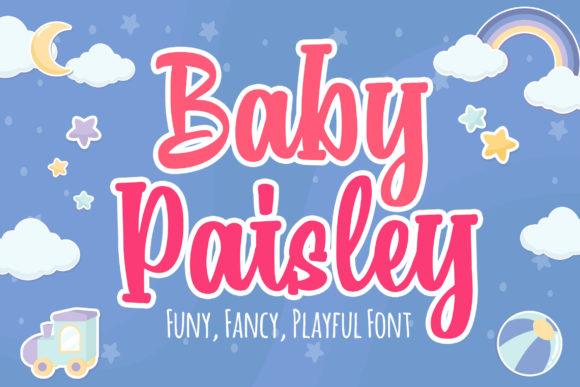
Baby Paisley is classified as a fun and playful display font, a category reserved for headlines, titles, and short text blocks where character takes precedence over dense body copy. The name itself suggests a certain softness and approachability, which is reflected in its rounded terminals and fluid curves. Unlike rigid sans-serif fonts or traditional serif typefaces, this font introduces organic variations into letterforms that mimic hand-drawn aesthetics without sacrificing the consistency required for professional output.
What makes Baby Paisley particularly distinct is its ability to create a narrative atmosphere. When used effectively, it transforms a standard layout into an engaging experience. The font's unique stroke weights and slightly irregular spacing give it a tactile quality, as if the letters were crafted by hand. This characteristic allows designers to make their ideas feel more realistic and grounded in a human context. In a digital environment saturated with sterile, corporate typefaces, Baby Paisley offers a refreshing alternative that invites the viewer in rather than pushing them away.
The versatility of this font extends beyond simple decoration. It is engineered to support spectacular designs across various media, from social media graphics and event invitations to packaging and branding materials. However, its power lies in its specificity. It is not a universal solution but a targeted instrument for achieving a particular emotional response. Understanding this distinction is crucial before integrating it into a project workflow.
Evaluating Strengths and Functional Tradeoffs
When comparing Baby Paisley to other display fonts, several strengths emerge that define its value proposition. Primarily, it excels at capturing attention quickly. In a cluttered information ecosystem, the unique shape of these characters acts as a visual hook. The playful nature of the font signals to the audience that the content is likely lighthearted, creative, or family-oriented, setting appropriate expectations before a single word is read.
Furthermore, Baby Paisley facilitates rapid brand differentiation. For businesses looking to stand out in competitive markets, using a distinctive typeface can be a low-cost, high-impact strategy. It allows small enterprises and individual creators to achieve a polished look without the expense of custom font commissioning. The font's inherent charm adds a layer of personality that generic fonts simply cannot replicate.
However, every design choice involves tradeoffs. The primary limitation of Baby Paisley is its suitability for extended reading. Like most display fonts, it lacks the legibility required for long-form body text. Attempting to use it for paragraphs of content can lead to eye strain and reduced comprehension rates. Additionally, its highly stylized nature means it may clash with serious or formal subject matter. Using a font associated with playfulness for legal documents, financial reports, or medical advice would undermine the credibility of the message. Therefore, the decision to use Baby Paisley requires a clear assessment of the tone and purpose of the communication.
Navigating Alternatives and Category Comparisons
Designers rarely choose a font in isolation; they typically evaluate it against a spectrum of similar options. When considering Baby Paisley, one must look at the broader categories of script, handwriting, and rounded sans-serif fonts. Each of these alternatives serves different functions and conveys different subtexts.
Compared to formal script fonts, which often feature complex ligatures and calligraphic flourishes, Baby Paisley is generally more accessible and easier to read at smaller sizes. While a traditional script might evoke elegance or tradition, Baby Paisley leans towards modern whimsy and approachability. This makes it a better fit for contemporary brands targeting younger demographics or those wishing to appear friendly and unpretentious.
In contrast to blocky, geometric sans-serif fonts, Baby Paisley offers warmth. Geometric fonts are excellent for conveying precision, technology, and stability, but they can feel cold or impersonal. If a project requires a balance between structure and friendliness, Baby Paisley fills a gap that purely geometric fonts leave open. However, if the goal is to communicate efficiency and speed, a clean sans-serif would be a superior choice.
Another point of comparison is with other "fun" display fonts. Many fonts in this category suffer from being overly busy or difficult to pair with secondary typefaces. Baby Paisley attempts to mitigate this by maintaining a consistent rhythm in its letterforms. This consistency allows it to pair more effectively with neutral sans-serifs or serifs, creating a balanced hierarchy. When evaluating alternatives, designers should test how well the font integrates with the rest of their typographic system. Does it harmonize, or does it fight for dominance? The success of Baby Paisley often depends on this pairing strategy.
Decision Factors for Implementation
Selecting the right font is ultimately a decision-making process based on specific constraints and goals. To determine if Baby Paisley is the right choice for your next project, consider the following factors:
- Audience Demographics: Is your target audience likely to respond positively to a playful aesthetic? This font resonates well with families, children's brands, and creative industries, but may alienate audiences expecting formality.
- Context of Use: Where will the font appear? Headlines, logos, and short captions are ideal. Avoid using it for navigation menus, footnotes, or instructional text.
- Brand Voice: Does the font align with your brand's personality? If your brand values innovation, humor, and connection, Baby Paisley reinforces these traits. If your brand prioritizes authority and seriousness, a different option is necessary.
- Readability Requirements: Will the text need to be scanned quickly? Ensure that the unique shapes of the letters do not hinder immediate recognition, especially when scaled down for mobile devices.
For users exploring alternatives, it is helpful to view font selection as a spectrum of emotional resonance. Baby Paisley occupies a specific niche on this spectrum—one defined by joy, creativity, and approachability. By placing it within this context, designers can avoid the common pitfall of choosing a font simply because it looks interesting, and instead choose it because it serves a strategic purpose.
Practical Applications and Realistic Examples
To illustrate the practical application of Baby Paisley, consider a scenario involving a local bakery launching a new line of seasonal cupcakes. The marketing team needs to create social media posts, flyers, and a menu board. Using a standard corporate font would convey professionalism but might fail to capture the excitement of the product. By incorporating Baby Paisley for the main headlines and product names, the bakery can instantly communicate the fun, sweet nature of their offerings.
In this example, the font is paired with a clean, simple sans-serif for the ingredient lists and pricing. This combination leverages the strengths of both typefaces: the playful energy of Baby Paisley draws the eye, while the neutral secondary font ensures that critical information remains legible and trustworthy. This approach demonstrates how Baby Paisley can be used to make ideas feel more realistic and create spectacular designs without overwhelming the viewer.
Conversely, imagine a law firm attempting to use this same font for their website header. Despite the desire to appear friendly, the mismatch between the serious nature of legal services and the whimsical appearance of the font would create cognitive dissonance. Clients might question the firm's competence or seriousness. This highlights the importance of alignment between visual style and service delivery. Baby Paisley is a powerful tool, but like any tool, it must be used in the right workshop.
Moving Forward with Confidence
Ultimately, the choice to use Baby Paisley should be driven by a clear understanding of what you want to achieve. It is a font that demands attention and rewards creativity, provided it is applied with intention. For designers and business owners alike, the key is to evaluate the font not just on its visual merits, but on its ability to support the broader goals of the project.
By weighing the strengths of its playful character against the limitations of its display-only nature, users can make a more informed decision. Whether you are creating a vibrant poster, a whimsical logo, or a cheerful email newsletter, Baby Paisley offers a unique opportunity to differentiate your work. As you explore your options, remember that the best design is often the result of a thoughtful balance between aesthetic flair and functional clarity. With careful consideration, Baby Paisley can become a cornerstone of a spectacular design strategy.