Twist Jelly: A Playful Display Font That Delivers Real Results
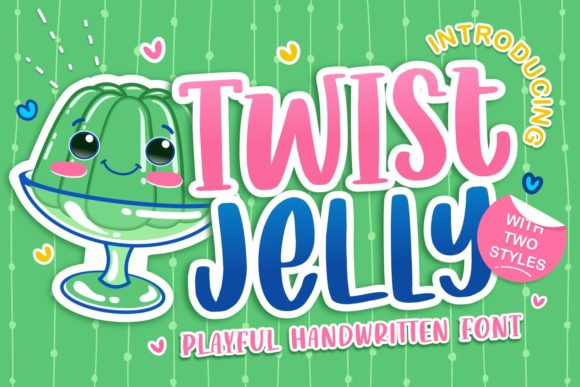
When you are staring at a blank canvas for a children's activity, a school project, or a fun marketing campaign, the last thing you want is a font that feels stiff, corporate, or boring. This is where Twist Jelly steps in as a game-changer. It is not just another decorative typeface; it is a cute and jolly display font designed to embody playfulness and authenticity. Whether you are a teacher creating engaging worksheets, a small business owner launching a kids' product line, or a blogger looking to add some personality to your posts, this font offers a distinct charm that standard sans-serifs simply cannot match.
However, while Twist Jelly is undeniably charming, using it effectively requires more than just downloading the file and hitting "bold." Many creators make the mistake of assuming that because a font looks fun, it will automatically work well in any context. Without understanding its specific characteristics and limitations, you risk undermining your message, reducing readability, or creating a design that feels chaotic rather than cohesive. Let's explore how to use this vibrant typeface correctly and avoid the common pitfalls that can turn a great idea into a visual mess.
The Allure of Authenticity and Playfulness
Twist Jelly stands out because it captures the essence of childhood without feeling forced. Its curves mimic the movement of jelly—bouncy, soft, and inviting. This makes it the perfect choice for any children activity or school project where you need to capture attention immediately. When parents or students see this font, they feel an immediate sense of warmth and approachability. It signals that the content inside is safe, fun, and tailored specifically for them.
For entrepreneurs and marketers, this authenticity is crucial. Modern consumers are tired of polished, sterile designs. They crave connection. By choosing Twist Jelly, you are signaling that your brand understands the joy of learning and playing. It bridges the gap between professional communication and genuine human interaction. But remember, this power comes with a responsibility: you must know when to deploy it and when to step back.
Common Mistakes When Using Twist Jelly
Even experienced designers sometimes stumble when introducing a high-impact display font like Twist Jelly. The most frequent error is overuse. Because the font is so visually loud and distinctive, it can easily dominate a layout if used for body text or long paragraphs. Unlike clean, neutral fonts that fade into the background, Twist Jelly demands attention. If you use it for everything, nothing gets noticed, and the design loses its impact.
Another significant misunderstanding involves legibility. While the font is excellent for headlines, banners, and short phrases, it can become difficult to read when scaled down too much or used in dense blocks of text. This is particularly problematic for educators who might try to print entire articles or instructions using this style. When readers struggle to decipher the letters, the message is lost, and the user experience suffers. You might think you are being creative, but you are actually creating friction.
- Mixing Incompatible Styles: Pairing Twist Jelly with other overly decorative fonts creates visual noise. It clashes with itself, making the design look messy rather than curated.
- Ignoring Color Contrast: The playful nature of the font often leads creators to pair it with pastel colors that lack sufficient contrast. This makes the text hard to read, especially for those with visual impairments.
- Overlooking Licensing: Some users download free versions without checking the commercial license. If you are a freelancer or business owner, using a font incorrectly can lead to legal issues later on.
How Mistakes Affect Your Results
The consequences of these errors go beyond simple aesthetics. If you choose to use Twist Jelly for critical information, such as safety instructions or pricing details, you risk confusing your audience. Inefficiency rises because users have to spend extra time trying to understand what you are saying. For a school project, this could mean students missing key concepts. For a business, it could mean lost sales due to unclear communication.
Furthermore, poor application affects the perceived quality of your work. A design that looks cluttered or hard to read suggests a lack of professionalism. Even if the content is excellent, the presentation can detract from the value. Readers may assume the creator did not care enough to get the details right. This is why evaluating the font before making a decision is essential.
Practical Advice for Better Choices
To ensure your projects shine, start by defining your hierarchy. Use Twist Jelly strictly for headlines, titles, and short emphasis points. Keep it large and bold where it needs to be seen. Then, pair it with a highly readable, neutral sans-serif or serif font for all body copy. This combination allows the personality of Twist Jelly to pop without sacrificing readability. Think of it as the star of the show; let it take center stage, but don't ask it to do the heavy lifting in the supporting cast.
Consider your medium carefully. On a digital screen, you have more flexibility with spacing and size. However, if you are printing physical materials like flyers or posters, check how the font renders at smaller sizes. Sometimes, the intricate details of a display font blur together when printed. Always test print a sample page before committing to a full run. This simple step can save you money and prevent wasted effort.
- Check Character Sets: Ensure the font includes all the special characters you need, such as accented letters or numbers, especially if your audience is international or your project involves complex data.
- Test Readability: Print a paragraph of text in Twist Jelly and hold it at arm's length. If you squint to read it, it is too small or too detailed for that purpose.
- Verify Licensing Terms: Before buying or downloading, read the license agreement thoroughly. Confirm whether you are allowed to use it for commercial projects, merchandise, or web embedding.
Evaluating Twist Jelly for Your Specific Needs
Before you finalize your design, ask yourself: does this font truly serve the purpose of the project? If you are creating a serious educational guide about advanced mathematics, Twist Jelly might undermine the authority of the subject matter. Conversely, if you are designing a poster for a summer camp or a birthday invitation, it is arguably the perfect tool. Context is king.
Also, consider the emotional tone you want to convey. Twist Jelly is jolly and authentic, which works wonders for building trust with families and young learners. It feels friendly and unpretentious. However, if you need to convey urgency or strictness, this font is likely the wrong choice. Being honest about the emotion you want to evoke will guide your typography decisions and lead to better outcomes.
By avoiding the trap of using every font you love for every task, you protect the integrity of your work. Take the time to experiment with pairing options. Try combining Twist Jelly with a clean geometric sans-serif to create a modern yet playful look, or pair it with a classic serif for a nostalgic, storybook feel. There is no single "right" answer, but there are definitely wrong ones that compromise clarity and engagement.
Ultimately, the goal is to communicate clearly while adding a touch of magic. Twist Jelly provides that magic, but only when used with intention. Whether you are a beginner taking your first steps in design or a seasoned professional refining a brand identity, respecting the strengths and limitations of this cute and jolly display font will elevate your work. Make sure your next project reflects the thoughtfulness and creativity that Twist Jelly was designed to inspire.