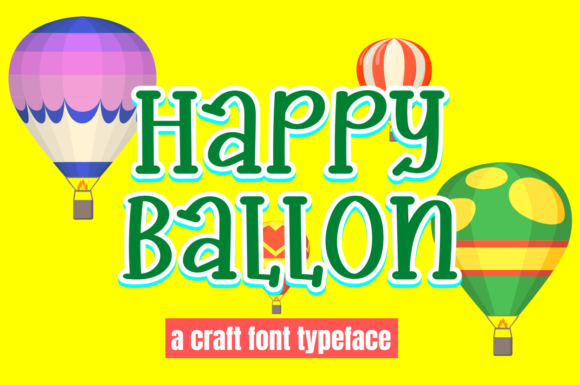
Happy Ballon: A Strategic Approach to Whimsical Typography
In the landscape of visual communication, the choice of typeface is rarely a mere aesthetic preference; it is a fundamental strategic decision that influences perception, trust, and engagement. Happy Ballon stands out as a display font that offers more than just a cute or charming appearance. It is a tool designed to inject whimsy and quirkiness into professional projects, capable of brightening up designs when deployed with intention. For entrepreneurs, marketers, and creators aged 20 to 50 who seek to differentiate their brand identity without sacrificing clarity, understanding how to integrate this unique typeface is essential for achieving better results.
The core value of Happy Ballon lies in its ability to soften rigid corporate structures while maintaining legibility. Unlike standard sans-serif fonts that prioritize neutrality, this font carries an inherent personality. When used strategically, it can shift the tone of a campaign from transactional to relational. However, relying on its charm without a clear plan can lead to confusion. The following analysis explores how to leverage Happy Ballon effectively within your operational and creative workflows.
Defining the Strategic Role of Happy Ballon
To make better decisions regarding typography, one must first understand the functional role of Happy Ballon. It is classified as a display font, meaning its primary purpose is to attract attention rather than to serve as body text for long-form reading. Its quirky character makes it ideal for headlines, logos, packaging, and social media graphics where immediate emotional connection is required.
For small business owners and freelancers, the challenge often involves standing out in a saturated market. Happy Ballon provides a competitive edge by signaling approachability and creativity. In sectors such as education, children's products, or lifestyle brands, this font can bridge the gap between professional service and friendly interaction. It suggests that the entity behind the design values fun and innovation, which can be a powerful positioning tool for decision-makers aiming to humanize their brand.
However, the font's utility extends beyond simple decoration. When added confidently to your projects, it supports goals related to customer experience and branding consistency. A well-placed headline using Happy Ballon can reduce cognitive load by making complex information feel accessible and inviting. This psychological effect is crucial for educators and bloggers who need to engage audiences quickly without overwhelming them with dense text.
Aligning Font Choice with Long-Term Goals
Strategic planning requires looking beyond the immediate visual appeal. Before integrating Happy Ballon, consider how it aligns with your long-term objectives. If your goal is to build a reputation for reliability and seriousness, overusing a whimsical font might undermine your authority. Conversely, if your strategy focuses on community building and engagement, this font becomes a vital asset.
- Brand Positioning: Does the font reflect your core values? Use Happy Ballon if your brand promises joy, ease, and creativity.
- Target Audience: Ensure the whimsical nature resonates with your demographic. Adults aged 20–50 appreciate authenticity; they are more likely to respond positively to a font that feels genuine rather than forced.
- Operational Efficiency: Using a distinctive font like Happy Ballon can streamline your design process. Instead of spending hours tweaking colors or layouts to create interest, the font itself provides the necessary visual weight, allowing you to focus on content strategy.
Practical Applications in Marketing and Operations
The application of Happy Ballon varies significantly depending on the medium and the specific outcome desired. Marketers and publishers should view this font not as a standalone solution but as part of a broader communication framework. Here is how it can be utilized across different operational areas.
In digital marketing, headlines are the gatekeepers of content. A standard headline might get ignored, but one featuring the quirks of Happy Ballon can stop the scroll. For instance, a blog post about productivity hacks could use a playful title to suggest that work-life balance is achievable and enjoyable. This subtle shift in tone can increase click-through rates and time on page, directly impacting performance metrics.
For product packaging and physical branding, the font adds a tactile dimension to the visual experience. Consumers often judge a product by its packaging before touching it. A label that uses Happy Ballon conveys a sense of care and attention to detail. It tells the consumer that the manufacturer has put thought into the presentation, which can justify a premium price point or encourage repeat purchases.
Educators and professionals creating presentations can also benefit from this approach. Traditional slides often suffer from "death by bullet points." By replacing generic headers with Happy Ballon, presenters can re-engage an audience that might otherwise tune out. The font acts as a visual cue that the upcoming content is distinct and worth paying attention to.
Decision-Making Guidelines for Implementation
While the potential benefits are clear, implementing Happy Ballon requires careful consideration. Randomly applying the font to every element of a project is a common pitfall that leads to visual clutter and reduced professionalism. To avoid this, adopt a disciplined approach to its usage.
- Establish Hierarchy: Use Happy Ballon exclusively for high-level headings or key calls to action. Reserve neutral, highly legible fonts for body text to ensure readability.
- Maintain Consistency: Define clear rules for when the font is appropriate. Create a style guide that specifies color combinations, sizing, and spacing to maintain a cohesive look across all platforms.
- Test for Accessibility: Whimsical fonts can sometimes compromise accessibility for users with visual impairments. Always test your designs to ensure that the message remains clear to everyone.
By adhering to these guidelines, you ensure that Happy Ballon serves your strategic goals rather than distracting from them. This intentional approach demonstrates a level of expertise that builds trust with your audience.
Risks and Mitigation Strategies
No design tool is without risk. The primary danger associated with Happy Ballon is the potential for perceived unprofessionalism if misused. In contexts where gravity and precision are paramount, such as legal documents or financial reports, this font can appear frivolous. Decision-makers must recognize the context in which the font operates.
Another risk is the dilution of brand identity. If a brand changes its messaging too frequently or uses conflicting typographic styles, it confuses the consumer. Relying too heavily on the novelty of Happy Ballon can cause the design to age poorly. Trends come and go, and a font that feels fresh today may seem dated tomorrow. To mitigate this, pair the whimsical elements with timeless design principles, such as strong grid systems and balanced whitespace.
Furthermore, there is the risk of alienating a segment of your audience. While many adults appreciate a touch of humor, others prefer a more formal tone. Conducting user research or A/B testing can help determine if the whimsical approach resonates with your specific target group. If the data shows a negative reaction, it is wise to pivot back to a more conventional typeface.
Maximizing Creative Potential Through Intentionality
The true power of Happy Ballon emerges when it is used intentionally to solve specific communication problems. It is not merely about making things look "cute"; it is about creating an emotional resonance that drives action. For creators and hobbyists, this means using the font to express passion and enthusiasm. For businesses, it means using it to foster a sense of community and belonging.
When you add Happy Ballon confidently to your projects, you signal that you understand the nuances of visual language. You are telling your audience that you have considered their experience and chosen tools that enhance their journey. This thoughtful curation leads to better results, whether that is increased engagement, higher conversion rates, or stronger brand loyalty.
Ultimately, the decision to use this font should be grounded in realistic use cases. Ask yourself: Does this design need a boost of energy? Is the message too serious? Will this font help me connect with my audience on a deeper level? If the answer is yes, then Happy Ballon is likely the right choice. But if the goal is strict informational delivery, other options may be superior.
By treating typography as a strategic component of your overall plan, you transform a simple design choice into a powerful driver of success. Happy Ballon offers a unique opportunity to brighten up your designs, but it requires a clear vision to unlock its full potential. With the right planning and execution, this whimsical font can become a cornerstone of your brand's identity, helping you achieve your goals and delight your audience.
As you move forward with your next project, remember that every pixel counts. Choose your tools wisely, plan your layout carefully, and let the personality of Happy Ballon shine through where it matters most. Your designs will reflect not just your creativity, but your commitment to delivering a meaningful and effective user experience.